FRED
a restaurant or café: 7 custom products to test without inventory
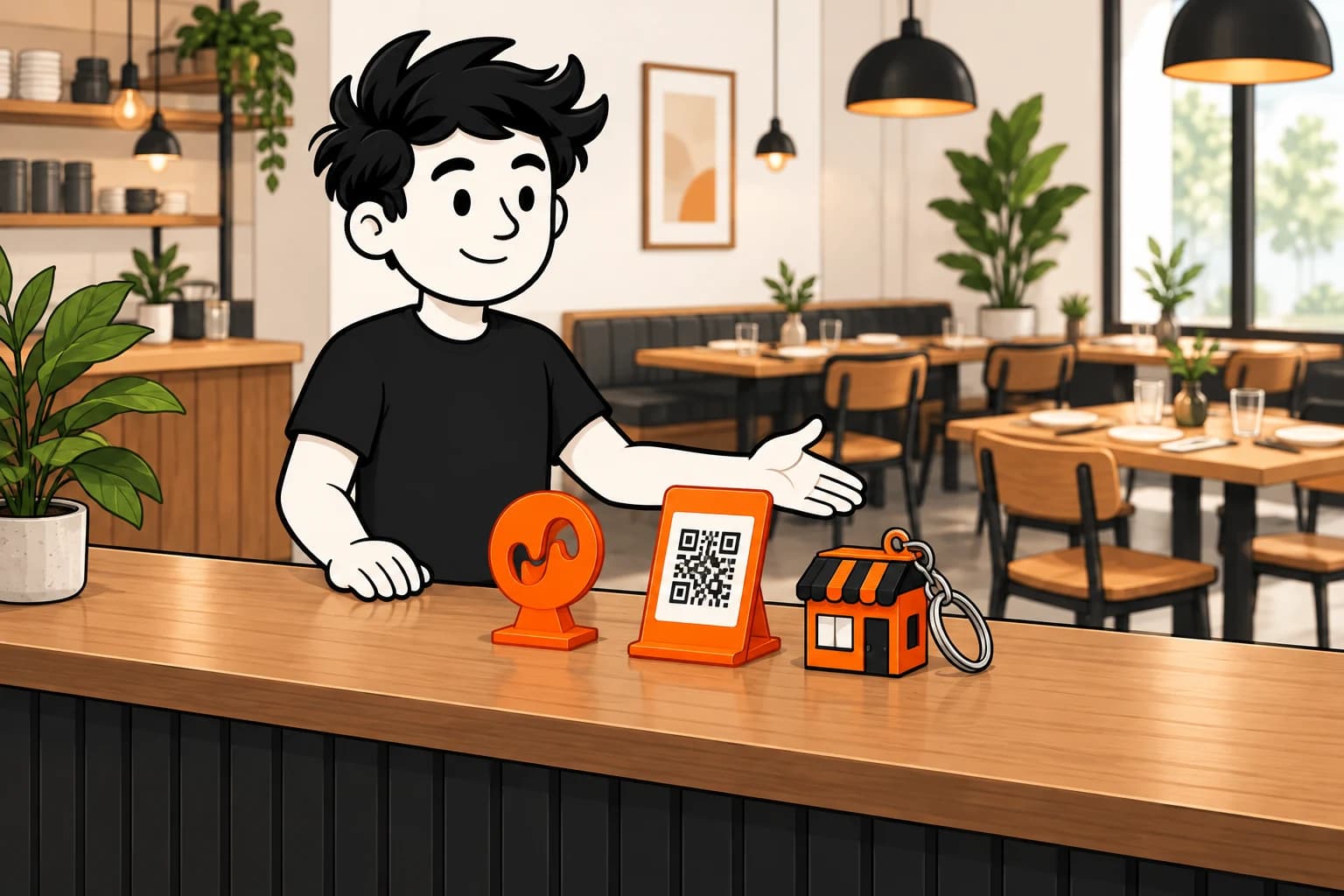
In a restaurant, the best custom object improves the table experience before becoming merchandise. This is where a carefully chosen object can become useful, memorable or sellable. The goal is not to add a generic logo item, but to turn the shopfront, signature dish and menu graphics into a product customers immediately understand. Here are seven practical options, why each one belongs and how to test them without holding a large inventory.
In this article
Why these products make sense for a restaurant or café
Customers do not value an object merely because it is 3D printed. They keep it when it recalls an experience, solves a small problem or represents their connection with a restaurant or café. Every proposal below therefore begins with an identifiable use before discussing shape or colour.
On-demand manufacturing lets you begin with one sample and then a handful of units. Dimensions, wording and personalisation can be corrected after real feedback instead of discovering too late that a large batch is sitting unused.
1. A signature-dish keyring
A signature-dish keyring belongs in this selection because its accessible format stays with customers in everyday life and keeps the experience present after their visit. That clear role gives it more value than generic promotional merchandise: customers understand when to use, give or keep it.
Keep the silhouette compact and one detail immediately recognisable. Use the shopfront, signature dish and menu graphics without overloading the model, then test size, legibility and strength on a physical sample. Show it to five relevant customers and record their objections before adding more variants.
2. A shopfront magnet
A shopfront magnet belongs in this selection because it turns a cue specific to the business into a recognisable keepsake rather than putting a logo on a standard object. That clear role gives it more value than generic promotional merchandise: customers understand when to use, give or keep it.
Turn the visual cue into a simple relief instead of a fragile miniature reproduction. Use the shopfront, signature dish and menu graphics without overloading the model, then test size, legibility and strength on a physical sample. Show it to five relevant customers and record their objections before adding more variants.
3. A personalised place card
A personalised place card belongs in this selection because personalisation gives people a clear reason to offer it as thanks, congratulations or a marker of an important date. That clear role gives it more value than generic promotional merchandise: customers understand when to use, give or keep it.
Reserve a legible area for the customer’s name, date or short message. Use the shopfront, signature dish and menu graphics without overloading the model, then test size, legibility and strength on a physical sample. Show it to five relevant customers and record their objections before adding more variants.
4. A stable table number
A stable table number belongs in this selection because it helps table service and counter ordering, with a base suited to wind, knocks and routine cleaning. That clear role gives it more value than generic promotional merchandise: customers understand when to use, give or keep it.
Measure the real location and design around that constraint rather than an arbitrary size. Use the shopfront, signature dish and menu graphics without overloading the model, then test size, legibility and strength on a physical sample. Show it to five relevant customers and record their objections before adding more variants.
5. A themed-evening decoration
A themed-evening decoration belongs in this selection because it makes a seasonal or shared event tangible and can be renewed without discarding the whole support. That clear role gives it more value than generic promotional merchandise: customers understand when to use, give or keep it.
Use a reusable attachment or base so only the dated element needs to change. Use the shopfront, signature dish and menu graphics without overloading the model, then test size, legibility and strength on a physical sample. Show it to five relevant customers and record their objections before adding more variants.
6. A miniature of the restaurant
A miniature of the restaurant belongs in this selection because it provides a more considered option for customers looking for a lasting keepsake or distinctive gift. That clear role gives it more value than generic promotional merchandise: customers understand when to use, give or keep it.
Invest more care in finish, packaging and presentation so the premium step feels credible. Use the shopfront, signature dish and menu graphics without overloading the model, then test size, legibility and strength on a physical sample. Show it to five relevant customers and record their objections before adding more variants.
7. A QR stand for menus or reviews
A QR stand for menus or reviews belongs in this selection because it places important information at the right height while remaining consistent with the identity of the venue. That clear role gives it more value than generic promotional merchandise: customers understand when to use, give or keep it.
Angle the visible face, conceal weight in the base and make the graphic replaceable. Use the shopfront, signature dish and menu graphics without overloading the model, then test size, legibility and strength on a physical sample. Show it to five relevant customers and record their objections before adding more variants.
Which product should you test first?
Choose the product connected with the most frequent moment in the business, not necessarily the most spectacular one. Prepare one version with a simple promise and indicative price. A focused test makes customer reactions easier to understand.
Place the sample in its normal context for one week. Count how many people pick it up, ask its price or spontaneously suggest personalisation. Those signals are more useful than an abstract survey when deciding between a small batch and on-demand sales.
Calculate price and margin before selling
Real cost is not limited to material. It depends on part volume, machine time, colours, finishing, accessories, packaging and shipping. Include personalisation time and selling-channel fees as well. An attractive product that takes too long to prepare can still be difficult to make profitable.
In the FRED seller workspace, configure the model, material, colours, quantity and destination to obtain a quote. The simulator then lets you test a selling price and additional costs to estimate gross margin per item and per month. Start with a sample, then compare a small batch with on-demand production.
Create the model without knowing 3D design
Start with a clear photo, a legible logo and three constraints: maximum dimensions, intended use and the feature that must remain recognisable. FRED AI Studio can help create a first proposal even if you do not use 3D software.
Simplify details that are too fine and plan non-printed accessories from the outset: ring, magnet, screw, adhesive or packaging. Use the sample to check assembly, edges, stability and colour before selling.
Launch this project for a restaurant or café with FRED
FRED is a European on-demand 3D printing platform. It connects your project with partner manufacturers and brings the file, quote, margin simulation, order, manufacturing and delivery tracking into one workflow. You do not need to buy printers, run a workshop or hold a large batch before learning whether customers want the idea.
In under an hour, you can choose a first product, describe the expected result or upload a file, configure a scenario and understand its cost. Model creation or repair may take longer, but you already leave with a scoped idea, a budget and a clear next step. Order a sample, test it in real use and only activate the variants worth selling.
Ready to sell without inventory?
The beta is opening gradually. Sign up and we'll let you know when it's your turn.
Request access