FRED
Broken chair leg cap: choose a replacement
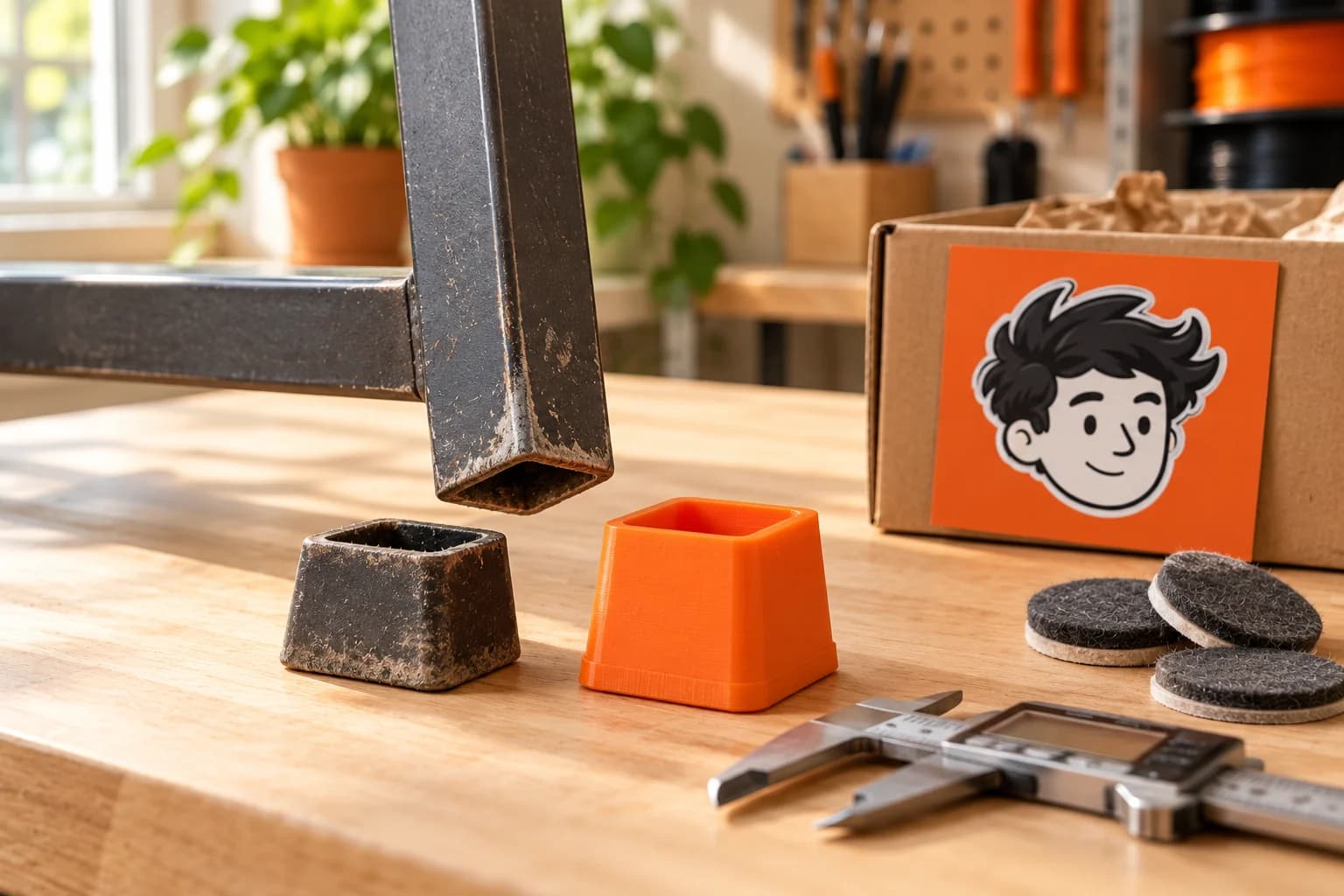
A chair leg cap can protect the floor and affect how a chair rests. Separate a cosmetic tube closure from a part that influences stability before considering a printed replacement.
In this article
Identify the cap type
Measure the correct inside or outside tube dimensions, corner radii, insertion depth and leg angle. Keep an intact matching cap as a reference.
Check suitable spares
Original or standard furniture glides may avoid custom design. Inspect damaged tube edges and seek professional advice for adjustable, articulated or load-bearing assemblies.
Describe the floor contact
State flooring, noise and grip requirements. Rigid printed plastic does not automatically behave like a soft commercial glide. Adding height to one leg can compromise the furniture's support.
Specify retention and material
Measure available depth and discuss how the cap stays attached. A design intended for flexible material may fail in rigid filament. Do not hammer a tight prototype into a damaged tube.
Check before use
Inspect unloaded fit and contact. Do not load a chair with uncertain stability. Define whether the printed item is merely a closure or a carrier for a suitable pad, and have functional suitability assessed separately.
Prepare suitable manufacturing with FRED
Prepare a checked STL, 3MF or OBJ for the intended use. FRED, currently in private beta, lets you configure manufacturing from that file, review the quote and follow the order with a partner manufacturer. Confirm available materials and capabilities before ordering.
Measurement and mechanical modelling are separate from manufacturing a supplied file. Present your brief when requesting access to clarify feasibility. The cover is an AI-generated illustration, not evidence of a repair tested by FRED.
Planning a replacement part?
Gather your measurements and 3D file, then describe your project to check manufacturing options. FRED is in private beta by invitation.
Request access