FRED
Broken furniture knob: match the right fixing
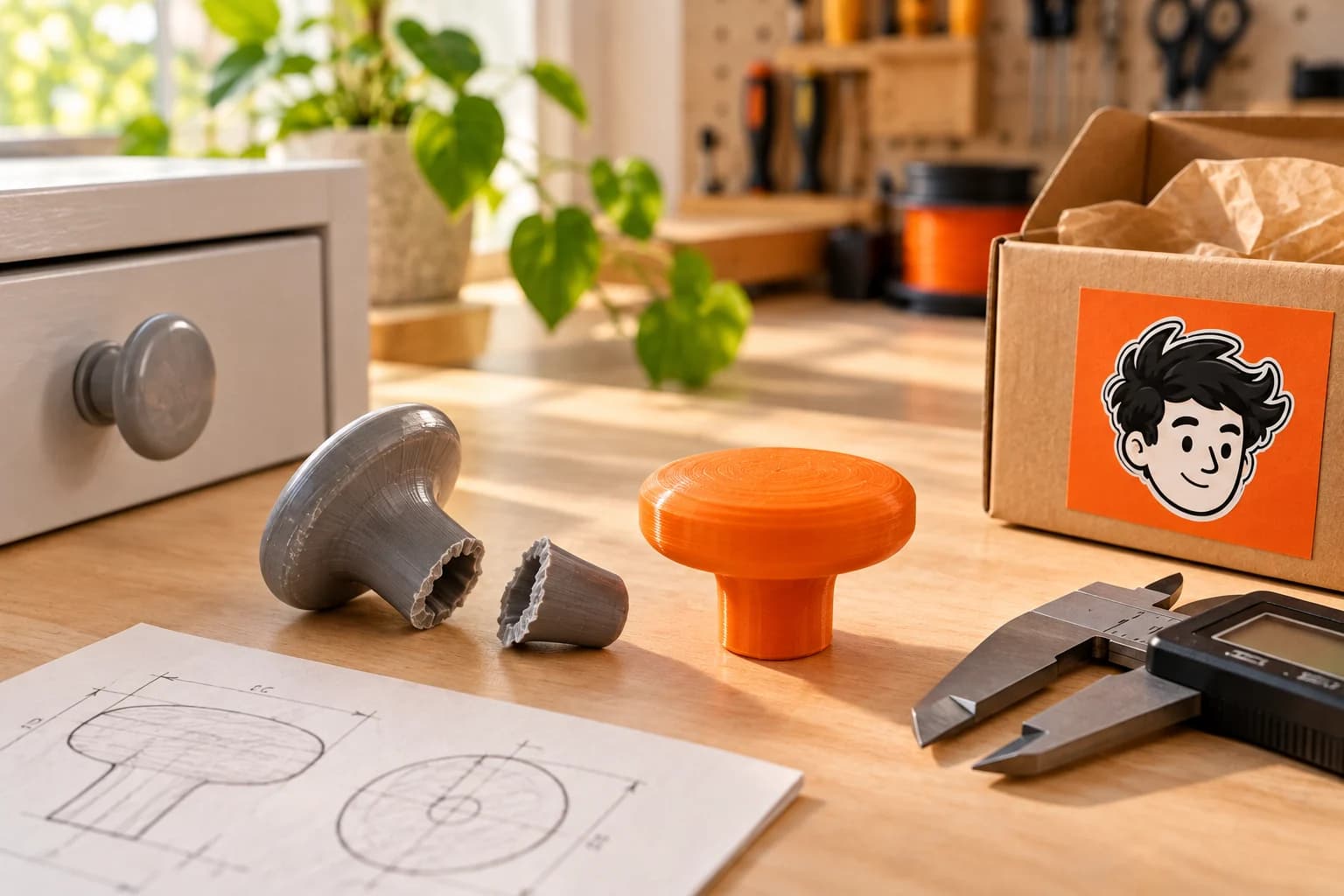
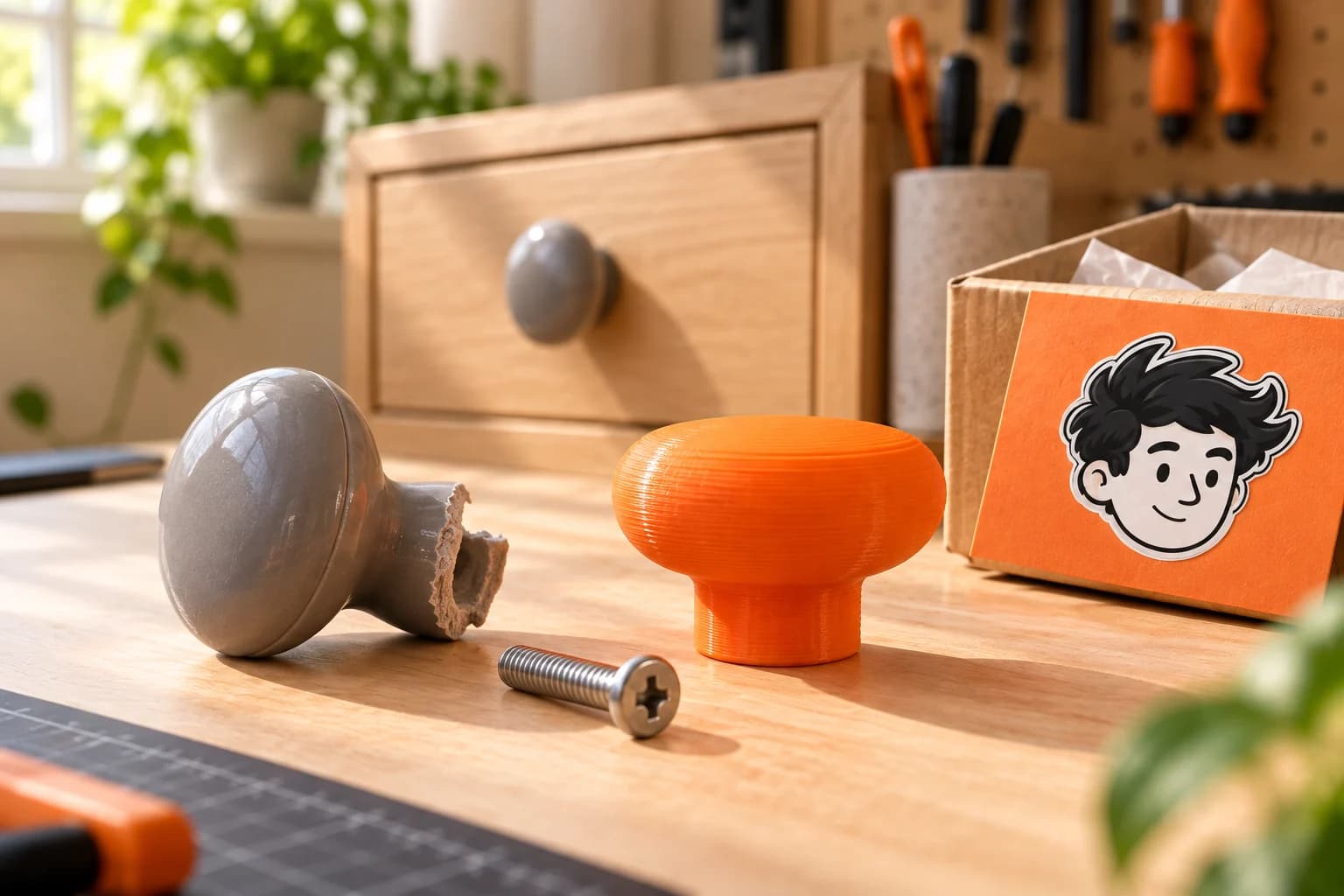
A broken furniture knob does not necessarily require a new drawer or new holes. Identify how it attaches, keep the original screw and measure the contact area before designing a replacement.
In this article
Check the damage
Distinguish a cracked knob shell from a damaged panel or bent screw. Check the furniture reference and standard spare options before commissioning a custom shape.
Identify the screw
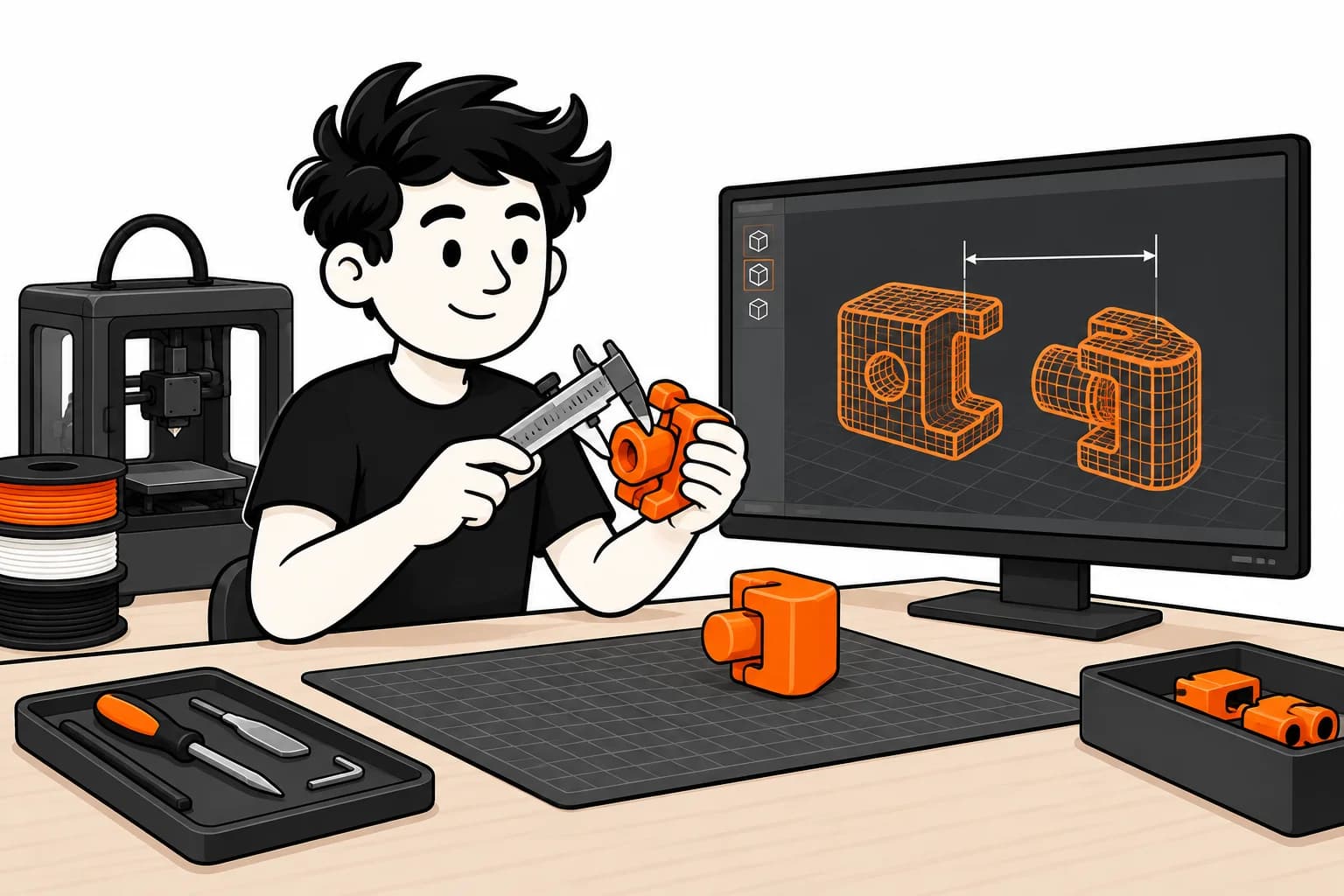
Record screw diameter, thread, length, panel thickness and actual engagement. A screw that bottoms out can leave the knob loose; extra tightening may crack the plastic.
Keep the grip usable
Measure the base footprint and finger clearance. Compare an intact knob if available. Investigate a stiff drawer rather than copying the same weak joint repeatedly.
Design the fixing
Discuss a suitable metal nut or insert and the material around it. A printed thread is not automatically equivalent to a metal fixing. Material and layer orientation must suit the loads and environment.
Test one sample
Check flat contact, gentle operation, rotation and comfortable edges before replacing a complete set. Keep the validated file and screw reference, and revise any sample that loosens or cracks.
Prepare suitable manufacturing with FRED
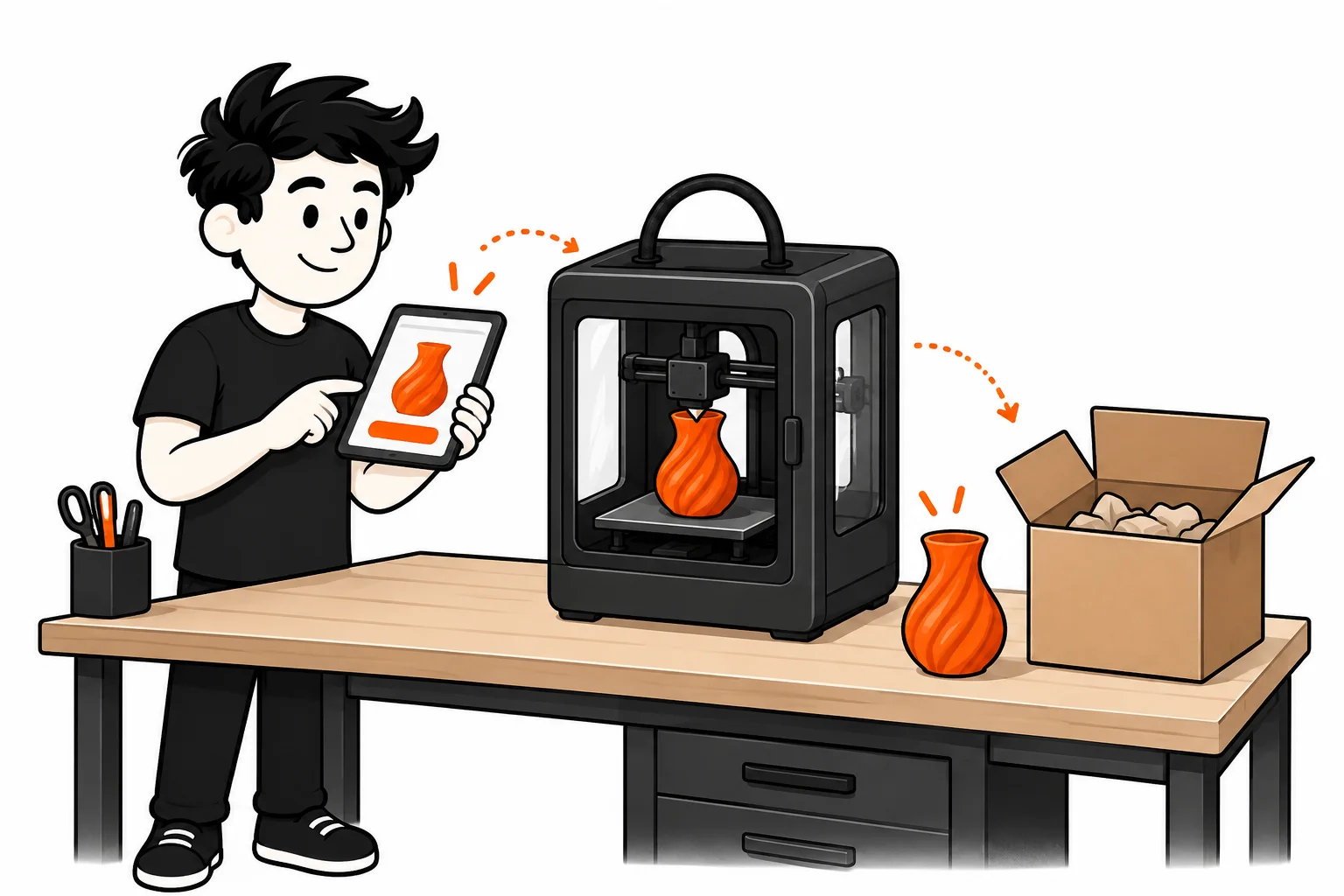
Prepare a checked STL, 3MF or OBJ for the intended use. FRED, currently in private beta, lets you configure manufacturing from that file, review the quote and follow the order with a partner manufacturer. Confirm available materials and capabilities before ordering.
Measurement and mechanical modelling are separate from manufacturing a supplied file. Present your brief when requesting access to clarify feasibility. The cover is an AI-generated illustration, not evidence of a repair tested by FRED.
Planning a replacement part?
Gather your measurements and 3D file, then describe your project to check manufacturing options. FRED is in private beta by invitation.
Request access