FRED
Dropshipping 2.0: DropPrinting with 3D printing
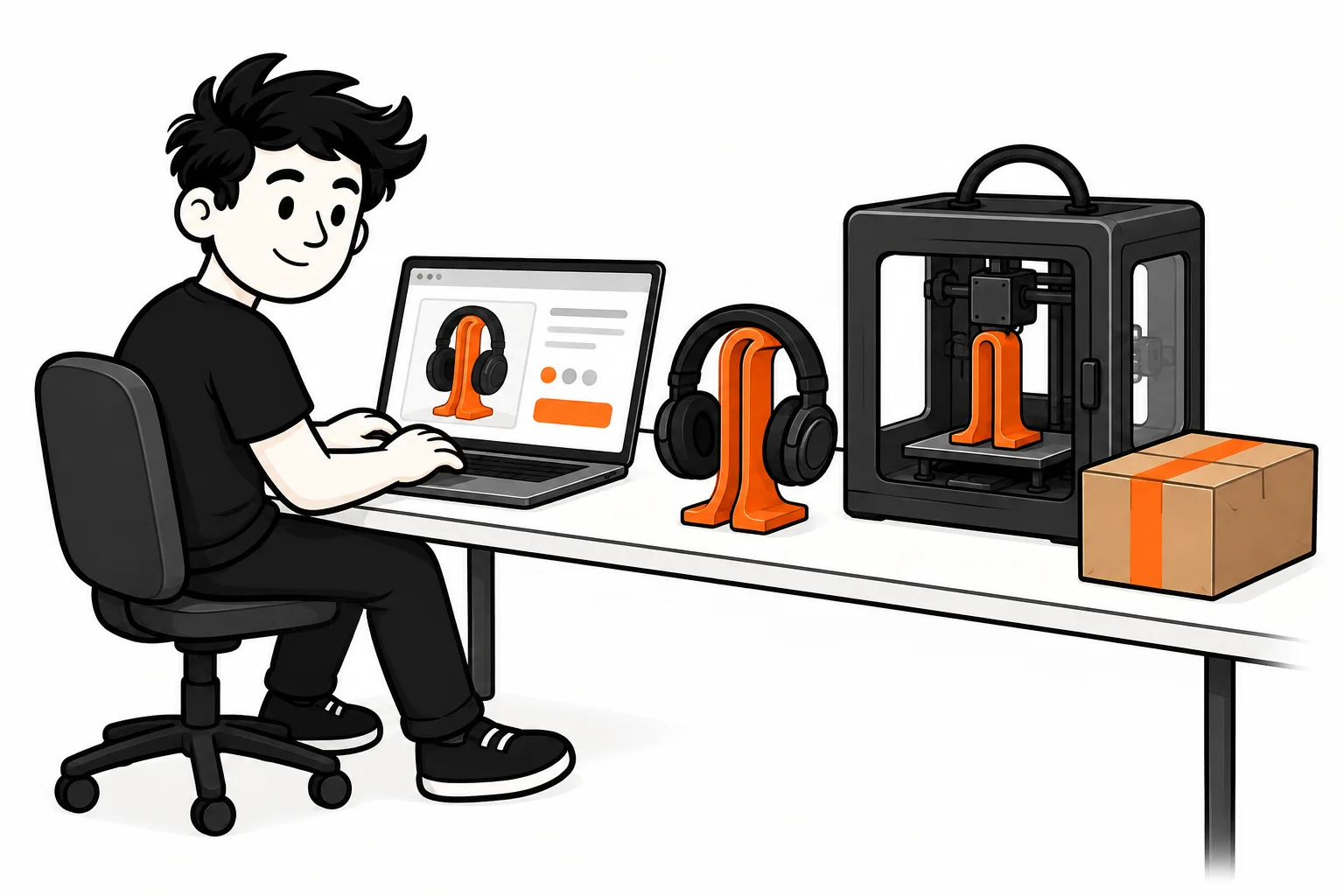
Selling without inventory changed how people start online stores. 3D printing and artificial intelligence now let sellers go further: offer objects designed for a particular use, person or community, then manufacture them to order. At FRED, we call this approach dropshipping 2.0. Its principle is DropPrinting, combining product creation, on-demand 3D printing and direct shipping to the customer. You develop your brand and store. FRED coordinates manufacturing and dispatch through its partner network, so you can develop and test original products without stocking finished goods.
In this article
What are DropPrinting and dropshipping 2.0?
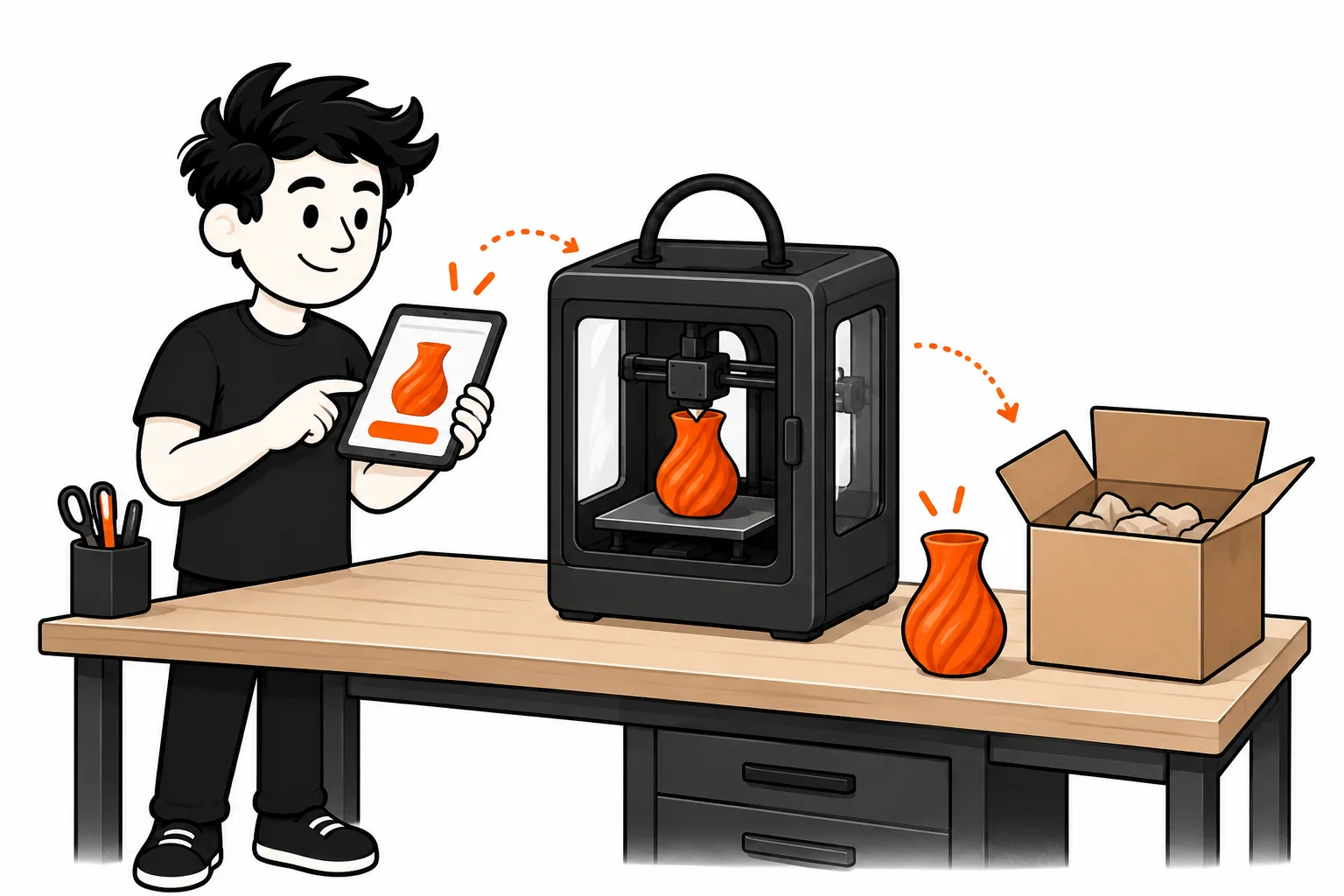
DropPrinting means selling objects that a manufacturing partner 3D prints to order and ships directly to the buyer. The seller prepares and markets the products while delegating manufacturing and shipping.
The workflow follows the dropshipping model: your store sells, and a partner handles dispatch. 3D printing adds the ability to manufacture the object’s shape from a digital file, using dimensions, colours or personalisation options prepared for your offer.
A desk stand can carry a name, a decorative object can become part of a collection, and an organiser can be designed for a particular space.
Here, dropshipping 2.0 describes FRED’s approach: using inventory-free selling to build an original, customisable product offering.
How DropPrinting compares with dropshipping and print on demand
These models all let a seller delegate order fulfilment. Their main differences are what you create and how the product is manufactured.
Traditional dropshipping: a supplier’s catalogue product, usually already manufactured. Personalisation depends on the supplier’s available options.
Traditional print on demand: a garment, poster or mug customised after the order. Personalisation usually involves a design, text or decoration applied to a base product.
3D DropPrinting: an object manufactured from a digital model after the order. Depending on the design, personalisation can involve shape, selected dimensions, raised details, text and colours.
3D print on demand extends custom manufacturing to the shape of the object itself. It can suit niche products, personalised gifts and accessories designed for a specific purpose.
Choose the method that suits the product. An original design made in small quantities has different manufacturing requirements from a standard item sold at high volume.
Personalisation gives buyers a reason to choose your store
Someone might be shopping for their desk, a gift for a particular person or an accessory that reflects their interests. Personalisation lets your offer respond to these specific needs.
In 2025, custom or made-to-order merchandise represented approximately 30% of gross merchandise sales on the Etsy marketplace, according to Etsy’s annual report.
For a store, the opportunity is to explain why a product suits that buyer. A name makes a gift personal, tailored dimensions solve a space constraint, and an original shape can appeal to a community.
3D printing lets you explore these variations through digital files without manufacturing every version in advance. Each change still needs to be compatible with the material, process and intended use.
AI makes it easier to move from an idea to a 3D model
Generative AI provides another starting point for 3D creation. Research such as TRELLIS, presented by its authors and Microsoft Research, demonstrates 3D generation from text or images.
Creators can describe a shape, start from a visual reference, compare directions and then refine a model. This reduces the need to model everything manually before exploring a first concept.
FRED’s AI Studio supports an image-to-3D-model creation workflow, helping you prepare a design before the manufacturing stages.
A generated model remains a starting point. Check dimensions, geometry, thin features and the physical result before selling. A texture visible on screen does not automatically become a printed colour or a raised surface.
A useful workflow is idea, initial shape, model adaptation, sample and product listing. AI helps with creation; product validation prepares that creation for sale.
Which products can you sell through 3D printing dropshipping?
Start a product idea with a clear need or an identifiable interest. These examples offer directions to develop and test.
Personalised gifts: a decoration with a name, date or message for a particular occasion.
Desk accessories: a headphone stand, cable organiser or storage designed around a particular space.
Community products: an original creation connected to your visual identity, an activity or a collection.
Custom decoration: an object offered in different formats, patterns or colours to suit an interior.
Figurines and keepsakes: a personal creation, potentially explored with AI, with appearance and fine details checked on a sample.
Your chosen model must be manufacturable using the available production capabilities, and you must have the necessary commercial rights.
For your first product, look for a personalisation option with visible value. Consider what customers will choose and why that choice matters to them.
How DropPrinting works with FRED
FRED brings product preparation, orders and manufacturing updates into one platform so you can sell 3D printed products without running your own workshop.
1. Prepare your creation. Upload a model or explore an idea in AI Studio, then prepare a version suitable for manufacturing.
2. Define variants. Choose dimensions, material, colours and the personalisation options you want to offer.
3. Check the product and its cost. Review the quote and order a sample to assess the physical result.
4. Organise store orders. Map products to their FRED manufacturing configurations through the workflow available for your sales channel.
5. Approve manufacturing. Following the required confirmations and payment, FRED looks for compatible capacity in its partner manufacturer network.
6. Track dispatch. The partner manufactures, checks and prepares the parcel for your customer. You follow the stages in FRED.
You develop your offering, content and customer relationships. FRED coordinates production and shipping.
Shopify, Etsy and your own website
Your sales channel needs to pass on the correct design, options and delivery address. The available integration determines how you organise that transfer.
Shopify with the FRED connector
The Shopify connector links your store to the products and variants prepared in FRED. Installation and activation are supported during the private beta.
Relevant orders can be imported, and shipping tracking can return to Shopify. The manufacturing workflow retains the required approvals.
Etsy for your original designs
Etsy can be a sales channel for your own designs made with a production partner. Its Creativity Standards require disclosure of the partner, accurate dispatch locations and disclosure of AI use in the description when it is used in the creation.
The native FRED Etsy connector is announced as coming later. Arrange an appropriate order-transfer workflow with the team before launching sales; an Etsy order does not currently trigger manufacturing automatically through a native FRED connector.
Your website with the FRED API
The FRED API supports a custom integration for your website, app or product configurator. It covers operations including files, quotes, orders and tracking information.
You retain your buying experience and can organise how the customer’s selected options reach manufacturing. The public API documentation describes operations and their prerequisites.
Build your brand through the packaging
The buying experience continues when the parcel arrives. Your brand name, product presentation and an accompanying message all contribute to that experience.
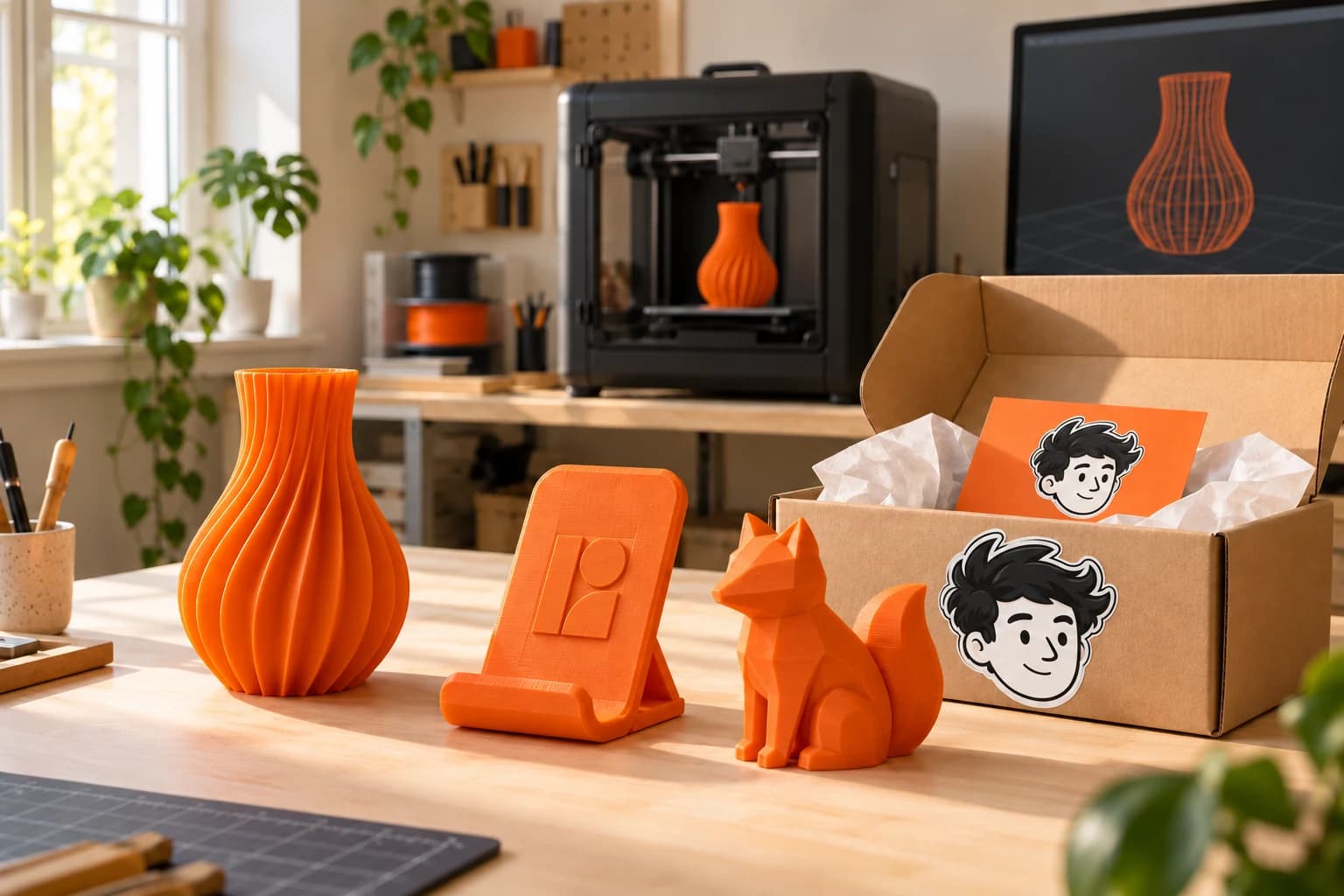
FRED lets you configure brand and sender details and prepare parcel inserts. Packaging options can complement this setup according to availability and the selected workshop’s capabilities.
You can prepare a card with your visual identity, a thank-you message or useful product information. Define these elements and their preparation requirements before taking orders.
DropPrinting gives you a way to build a consistent brand from the creation in your store through to its delivery.
How to evaluate a DropPrinting margin
Selling without finished-goods inventory reduces the need to buy products in advance. Your selling price still needs to cover the costs of making and selling each product.
Include design and any AI generation credits, samples and adjustments, manufacturing and FRED fees, branding options, shipping, store and payment fees, customer acquisition and after-sales support.
Useful personalisation can help justify your price. Your margin will depend on the actual product cost, your offer and your ability to find buyers.
Start with a specific product configuration and a representative delivery destination. Check FRED pricing, then calculate the product’s costs before setting its store price.
Launch a first DropPrinting collection
Choose an audience and a specific use: a gift for an occasion, an accessory for an activity or storage for a particular space.
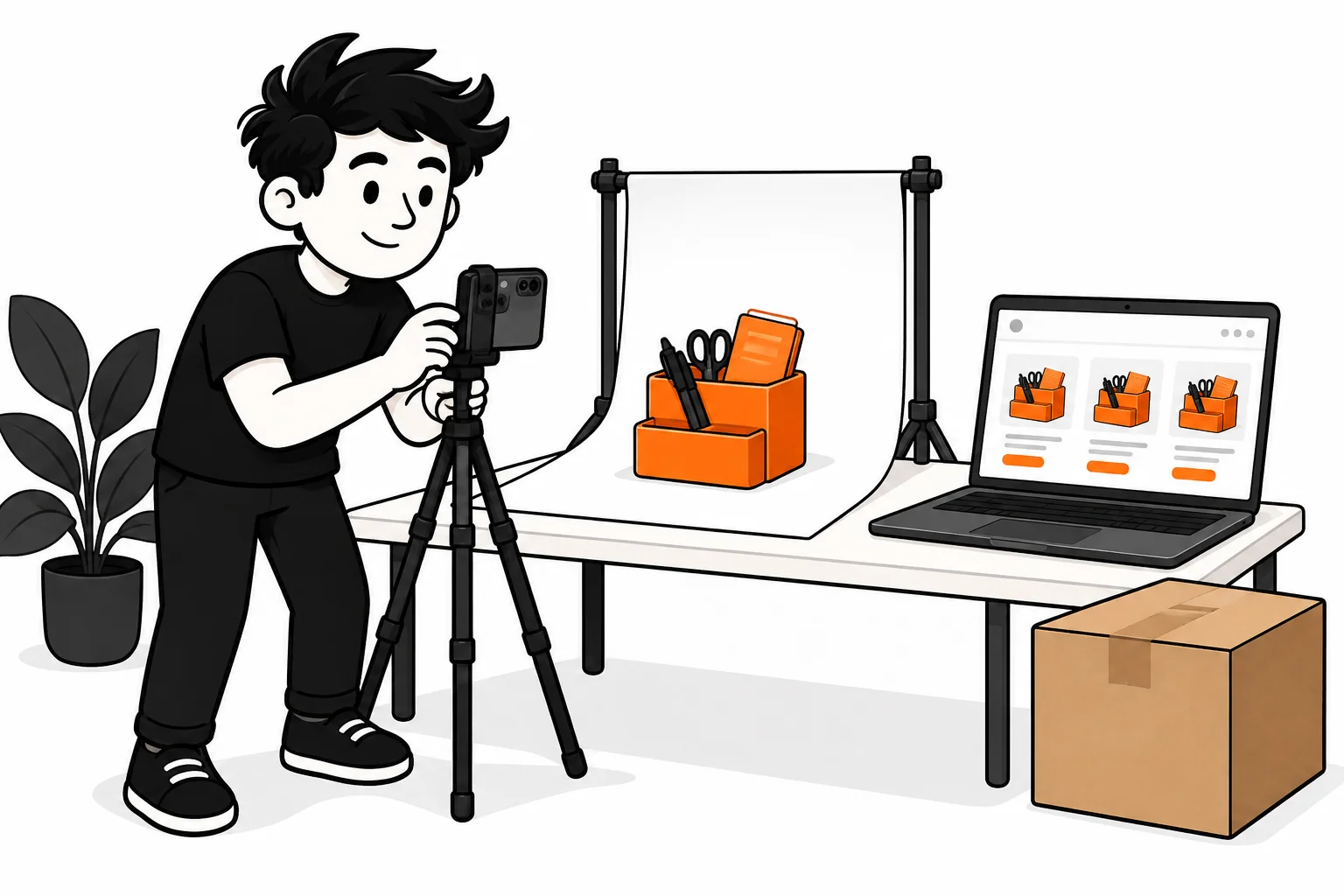
Prepare one product with a few understandable options. A name and two colours may be enough to test interest. Have a sample made, photograph the result and describe dimensions, appearance and your delivery commitment clearly.
Test the full order journey as well: what information does the customer provide, how do you receive it and how do you verify the personalisation before manufacturing?
Once the workflow is validated, early feedback can help you improve the product and choose which variants to develop.
Do you need a 3D printer for DropPrinting?
You can delegate manufacturing and shipping to a partner. With FRED, you prepare orders in the platform; following the required approvals, they can be offered to compatible manufacturers. You can develop your store without running a printer fleet.
Can you start without 3D modelling skills?
AI can help you explore an initial shape, and you can also work with a designer. Either way, the model needs adaptation and testing before it becomes a product you can sell.
Can you sell an AI-generated object?
Check the commercial-use terms of the tools involved, rights to reference material and your sales platform’s rules. For manufacturing, check the file and the physical result on a sample too.
Which lead time should you quote for on-demand 3D printing?
Allow for approval, manufacturing and transport. Lead time depends on factors including the model, quantity and available capacity. Base customer commitments on the conditions offered for the order.
Move from your idea to a first sale with FRED
DropPrinting opens another route for stores that want to sell without inventory and offer products designed for their customers. AI helps explore shapes, 3D printing makes on-demand manufacturing possible, and FRED coordinates the journey from creation to parcel.
Have an idea for a collection or a store to develop? Request FRED private beta access to prepare your first product, check manufacturing and build your sales workflow.
Ready to sell without inventory?
The beta is opening gradually. Sign up and we'll let you know when it's your turn.
Request access